Neighbourhood picks
Eating in Reading: Neighbourhoods by Budget, and Where to Sleep After
A practical guide to Reading's food streets by price band, plus the calmest places to base yourself within walking distance of the table.
Chain-and-counter territory: Broad Street and The Oracle
If you are arriving by train into Reading station, the easiest first meal is a five-minute walk away. Broad Street and the Oracle shopping centre hold most of the town's casual chains, from noodle bars to burger kitchens, and the Riverside level at the Oracle has waterside tables looking over the Kennet. Expect to pay roughly £10-18 for a main at lunch and £15-25 in the evening. It is not the most distinctive food in Berkshire, but for a late arrival, a family with tired children or a quick pre-theatre bite at the Hexagon, the convenience is hard to argue with.
The trade-off is atmosphere. The Oracle is busiest from noon to 2pm and again from 6pm, and the car parks on Mill Lane and Queen's Road fill quickly on Saturdays. If you want the same convenience with a little more character, walk eight minutes east to King Street and Duke Street, where independent cafés and small restaurants sit among the older shopfronts. Book ahead for Friday and Saturday evenings between May and September, when the riverside terraces are at their most popular and walk-ins wait twenty minutes or more.
Mid-range independents: King Street, Duke Street and St Mary's Butts
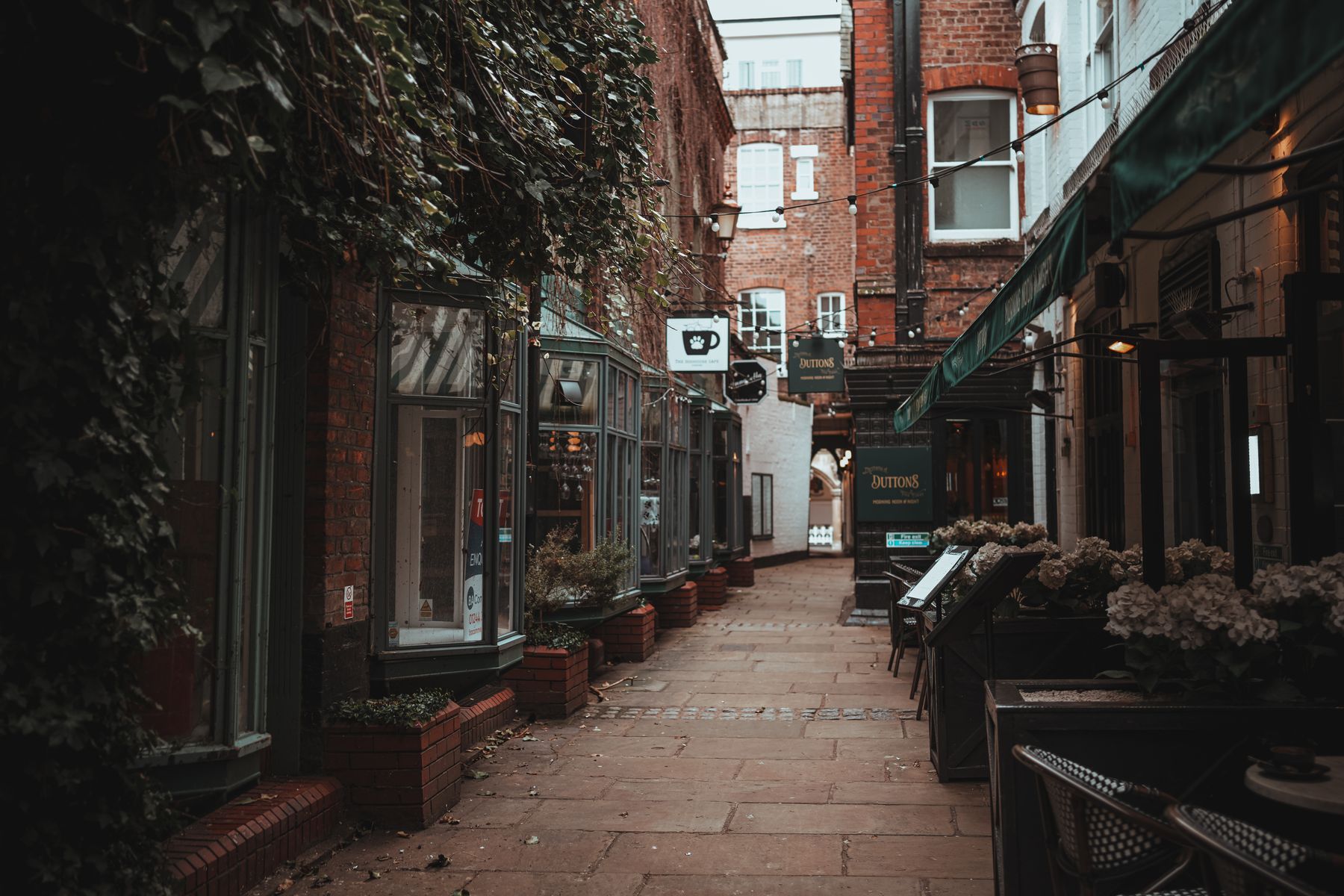
The grid of streets between the station and the old town is where Reading eats best at the middle of the market. King Street, Duke Street and the lanes around St Mary's Butts hold a shifting roster of independent restaurants, modern British, Italian, Indian and Levantine among them, with mains typically in the £14-24 bracket. This is the band I would book for a birthday dinner or a first evening in town: the rooms are smaller, the service more personal, and most places take reservations directly by phone or through their own websites.
Timing matters. Many independents shut on Mondays and Tuesdays, and Sunday openings vary, so check before you build an evening around one. Lunch is the value play: several of the same kitchens run shorter midday menus at noticeably lower prices, and the streets are quieter before 1pm. For a pre-dinner drink, the lanes off Market Place have a handful of small bars; for something quieter, the Forbury Gardens end of town is a short stroll away and makes a pleasant loop before or after eating.
Where to sleep, and how the geography decides it
Reading's hotels cluster in three broad zones, and your dinner reservation should pick the zone. The station quarter, bounded roughly by Station Road, Forbury Road and Blagrave Street, puts you within ten minutes of Broad Street, the Oracle and the Hexagon, and is the sensible choice for a one-night stay built around a meal and a show. The old-town side, around Friar Street and West Street, is a similar walk to the independents but quieter at night. Further out, the business-park hotels along the A33 towards Basingstoke and the M4 corridor at Junction 11 are cheaper per night but need a taxi or a twenty-minute drive back after dinner.
For a food-led weekend I would book the station quarter: you can walk to dinner, walk back, and catch a morning train without touching the car. Expect to pay more on Friday and Saturday nights and during Reading Festival in late August, when rooms across the town tighten. If you are driving, confirm parking before you book, as central hotels often charge separately and the Oracle car parks are priced by the hour rather than the night.
Turning a shortlist into a booking enquiry
Once you know which streets you want to eat on, the enquiry itself is simple if you give the hotel three things: your dates, the number of nights, and whether you need parking or a late check-in after dinner. Reading's central hotels range from budget chains to full-service four-star properties, and the difference in what you get for the money is mostly in the room size, the breakfast and the parking, not the location. Send the same enquiry to two or three properties and compare the total, including any parking charge, rather than the headline room rate.
Late check-in is worth flagging. Kitchens in the old-town independents often take last orders around 9.30pm to 10pm, so a room booked with an 11pm arrival needs the front desk told in advance. If you are combining a Reading stay with a day out, Oxford is about 25 minutes by train and the Chilterns are a short drive north, but keep the bed in Reading. Send your dates through the enquiry form and let the hotels reply directly with their availability.
Questions, answered
Which part of Reading is best for a food-focused weekend?
Base yourself in the station quarter, within ten minutes' walk of Broad Street, the Oracle and the King Street independents. You can eat and return on foot, and the train home is easy. The old town around Friar Street is a quieter alternative at the same distance.
When is Reading busiest for restaurant bookings?
Friday and Saturday evenings from May to September, plus late August during Reading Festival, when the town fills and central rooms tighten. Many independent kitchens close on Mondays and Tuesdays, so check opening days before planning an evening around a particular restaurant.
Do I need to book a hotel before choosing where to eat?
Choose the neighbourhood first, then the room. The station quarter, old town and outlying business parks differ by a twenty-minute drive, so matching your hotel to your dinner plans saves taxis. Confirm parking and late check-in when you enquire, especially for Friday arrivals.
Doing good is the business: every booking through Stay Reading funds one verified tonne of carbon removal — same room, same price, no markup.
Start your search