Getting out of Reading and onto the river
Start at Reading station and walk south through the Oracle and along the Kennet to its confluence with the Thames at Blake's Lock, roughly 20 minutes on foot. From there the Thames Path runs east past the gasworks and the horseshoe bridge at the confluence, then opens out past Reading Rowing Club and the Green Park business park. The going is flat, mostly tarmac or compacted gravel, and entirely signposted with the National Trail acorn symbol. Allow about 75 minutes to reach Sonning at an easy pace, or 50 minutes if you walk briskly without stopping.
If you would rather save your legs for the return, take the train one stop from Reading to Twyford (about 8 minutes, services roughly every 20 minutes) and walk south from Twyford along the river via Charvil and the Loddon confluence. That cuts the walk to around four miles and gives you the option of returning to Reading entirely on foot. Either way, wear shoes with grip: the stretch past Shiplake and the Sonning backwater floods most winters and the path can be muddy from November through March.
What you actually see along the way
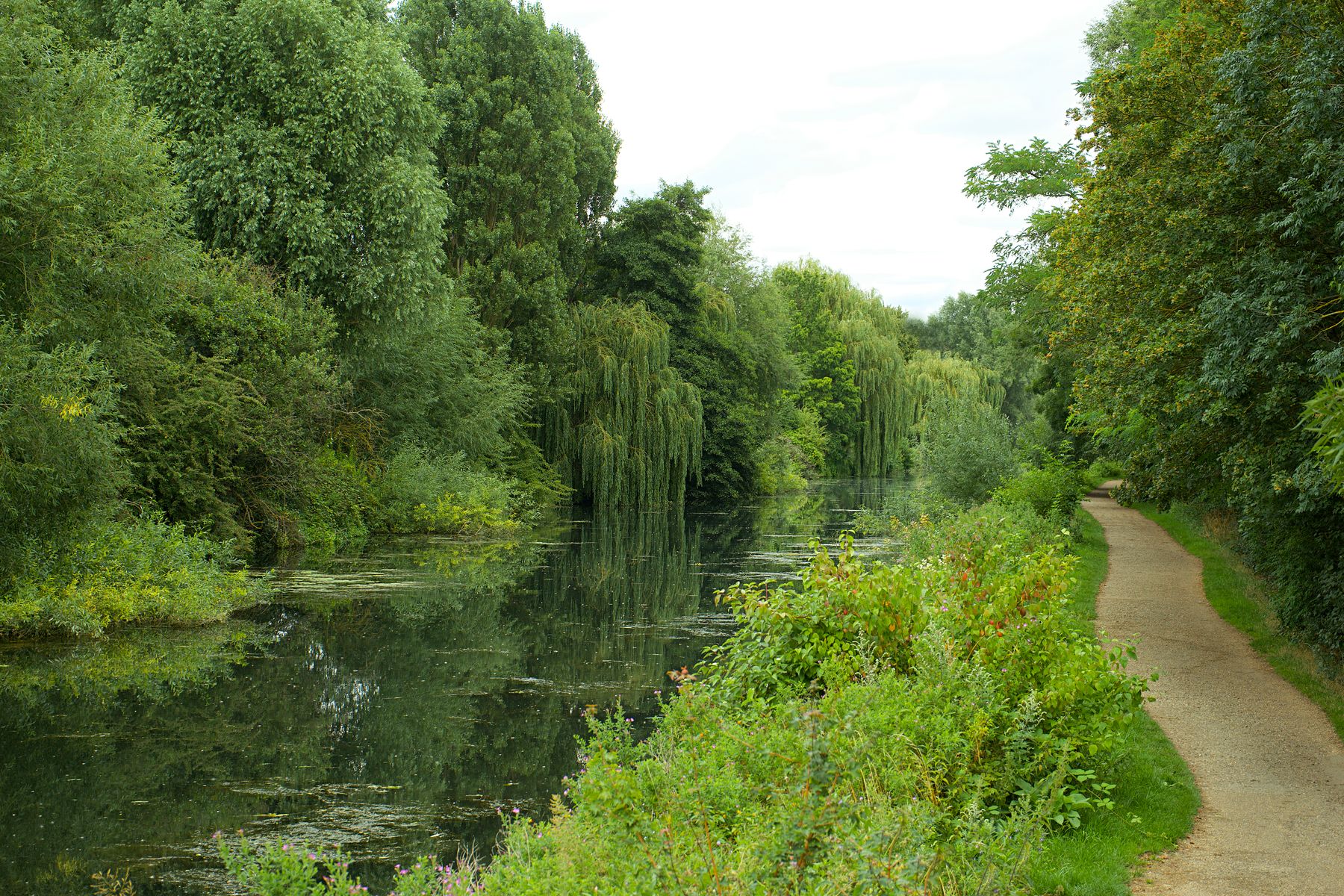
The first half is functional rather than beautiful: light industry, the Reading FC training ground at Bearwood, and the wide gravel pits near Dinton Pastures, which are worth a detour if you have children or an interest in birdlife. Herons, red kites and the occasional kingfisher are realistic sightings. The scenery improves sharply after Sonning Bridge, where the path runs between willow-lined banks and the Thames backwaters. The lock and weir at Sonning Eye, with the old mill buildings beside it, is the natural halfway stopping point.
The village itself is a ten-minute walk uphill from the bridge and rewards a loop: the church of St Andrew, the timber-framed houses on Thames Street, and the towpath towards Shiplake. Sonning is small, so do not plan to spend a whole day there. Most people combine the walk with a pub lunch, then either retrace their steps or continue along the river to Shiplake and Henley, which adds another two hours one way. The stretch between Sonning and Shiplake is the quietest and the best for wildlife.
Timing, seasons and where to base yourself
May and June are the best months: long evenings, cow parsley and hawthorn in the hedges, and the river at a sensible level. September is nearly as good and much quieter. July and August bring crowds at Sonning Bridge and on the Shiplake towpath, and the lock area can feel busy at weekends. Avoid the two weeks after heavy rain, when the Thames floods the meadow sections near Charvil. Weekday mornings are the calmest, and the light on the water is better before 10am.
Reading is the practical base for this walk. Hotels in the town centre put you within a 15-minute walk of the Kennet and a 10-minute walk of the station, which matters if you are arriving by train or using Reading as a stopover between London and the west. The alternative is to stay in Twyford or Henley and walk a shorter section, but you will then need a taxi or a second train to get back to the river. For a single half-day, I would book a town-centre Reading hotel near the Oracle and treat the walk as a morning out.
Practicalities and what to skip
Bring water; between Blake's Lock and Sonning there is nowhere reliable to buy it, and the pubs at Sonning Eye are a fair walk from the path. The Bull at Sonning and the pubs near the bridge are the obvious lunch stops, but they fill quickly on Sundays, so book ahead or eat in Reading before you set out. Public toilets are scarce; use the station or the Oracle before leaving. The path is step-free and largely accessible, though the section past the weir at Sonning Eye is narrow and unpaved.
Skip the loop around Dinton Pastures unless you have a specific reason to go; it adds distance without much river scenery. Skip the Henley extension unless you have a full day and can arrange a train back from Henley or Shiplake. And skip the idea of walking back after dark without a torch: the unlit stretch past the rowing club is genuinely hard to follow in winter. Twyford station is a useful bail-out point, 25 minutes from the river by foot.
Questions, answered
How long is the walk from Reading to Sonning?
About 3 miles one way, taking 60 to 75 minutes at an easy pace on flat, signposted towpath. The return makes a comfortable half-day, with time for lunch in Sonning.
Can you get to Sonning without a car?
Yes. Walk the Thames Path from Reading, or take a train to Twyford and walk south to the river. Local buses serve Sonning from Reading, but the walk is the point of the trip.
When is the best time to walk the Thames Path at Sonning?
Late May and June for long evenings and green hedgerows, or September for quieter paths. Avoid the weeks after heavy rain, when the meadows at Charvil flood and the towpath turns muddy.
Doing good is the business: every booking through Stay Reading funds one verified tonne of carbon removal — same room, same price, no markup.
Start your search